
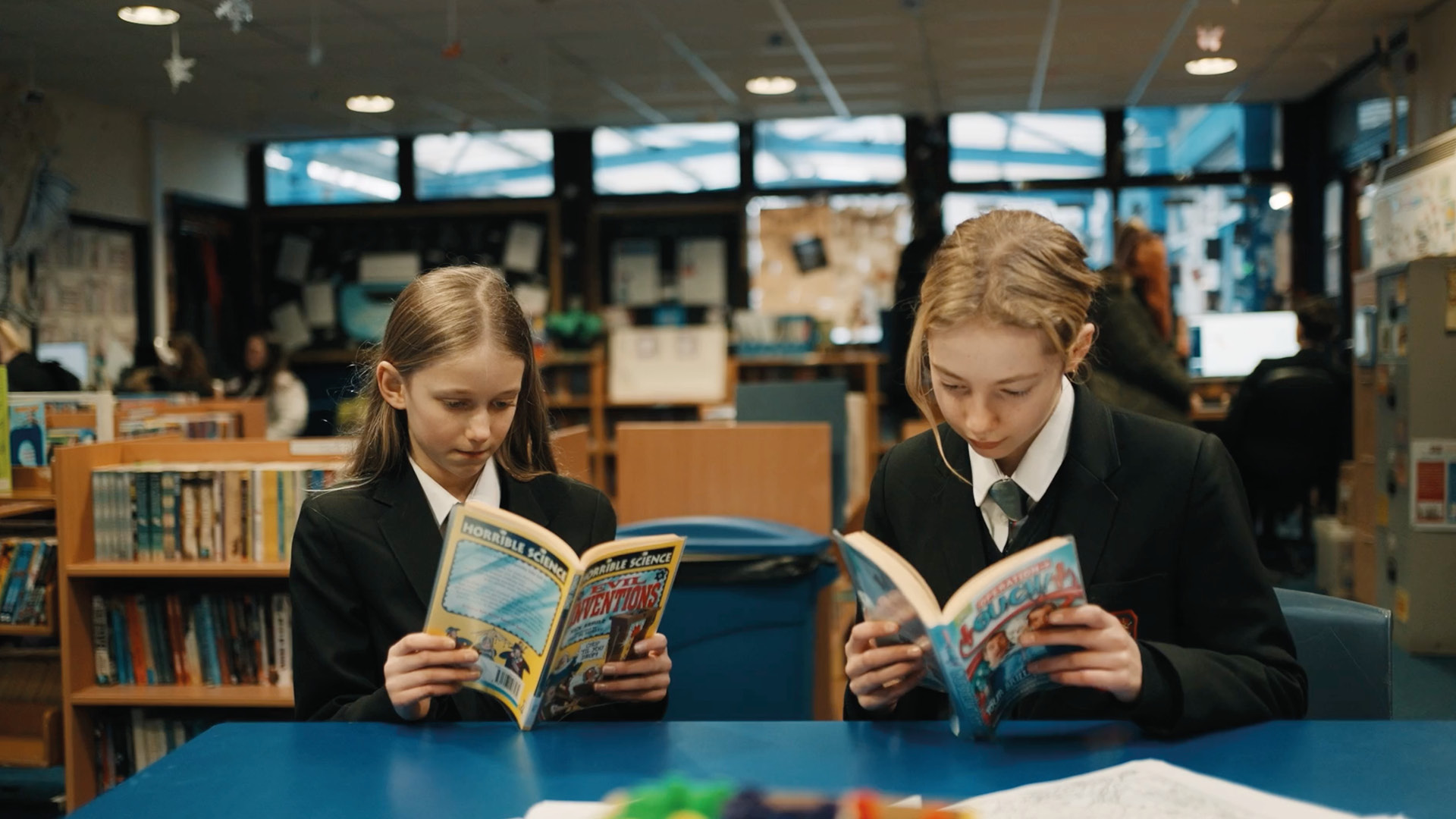
The safeguarding of our students is our primary concern.

Should you wish to raise any concerns then please speak to one of our  Designated Safeguarding Leads (DSLs):

Alternatively, you can contact us to report a concern using the following email address: safeguarding@wldhigh.co.uk


You will find the full Child Protection and Safeguarding Policy on our “Policies”

At Walton-le-Dale High School, we feel that all our staff work hard to contribute to making the school a safe place to learn, for our pupils to be cared for, and shaped in to well-rounded, responsible young people. We aim to protect pupils from harm, promoting the well-being and welfare of all who attend our school.

We feel that the school is committed in promoting the emotional, physical, mental and educational needs of every pupil and recognise our roles and responsibilities in protecting and keeping our pupils safe.

We are proud of our pupils and staff and believe that we promote a positive, nurturing, and stimulating environment through our lessons, and our vertical form and house systems, so that our pupils feel safe and happy.

Should you have concerns about the safety or well-being of someone at our school, please talk to one of our Designated Safeguarding Leads.

Alternatively, you may wish to contact your child’s House Achievement Leader who will share this information with one of the DSL’s.

Operation Encompass was set up to provide early reporting to schools about any domestic abuse incidents that occur outside of school hours to which a young person attending Walton-le-Dale High School has been exposed, and which might then have an impact on their schooling the following day. Following an incident, students will often arrive at school distressed, upset, worried and unprepared.

Operation Encompass aims to ensure that appropriate school staff are made aware early enough to help and support children and young people in a way that means they feel safe and included.

Information will only be shared with the school by the police where it is identified that a young person was present, witnessed or was involved in a domestic abuse incident.

A nominated member of school staff, known as an Encompass Key Adult, has been trained to liaise with the police. They will be able to use information that has been shared with them, in confidence, to ensure that the school is able to make provision for possible difficulties experienced by children or their families. The Key Adults will keep this information confidential, and will only share it on a need to know basis, for instance, to teaching staff for the child or young person. It will not be shared it with other school students. The Key Adults at WLD are Mrs Ashton (Designated Safeguarding Lead) and Miss Wilcock (Deputy DSL).

You can find out more information by visiting the Operation Encompass website (click the link below) or by contacting Mrs Asthon at school.

https://www.operationencompass.org/

Operation ‘Encompass’ – early intervention letter

There are lots of different types of support available for children with mental health issues. These include the following.

Contacting a GP

GPs may be able to diagnose mental health conditions, suggest next steps and provide medication.

There is information on the Childline website about visiting GPs

Child and adolescent mental health services (CAMHS)

Across the UK, CAMHS is a free NHS service for children and young people that aims to help with mental health problems such as depression, anxiety, self-harm and eating disorders.

Teachers, social workers, GPs and parents can refer a young person to CAMHS. Services differ from area to area.

In England, you can find CAMHS services in your area through the NHS CAMHS webpage.

Counselling and therapeutic services

Counselling services are available to help children and young people with their mental health. Services can include helplines, one-to-one counselling sessions in person, online or by phone, and online chats and forums.

These services are available through a range of fee-paying and free services including schools and the NHS.

Childline

Children and young people can get free, confidential support from a Childline counsellor via online chat, email or phone.

Childline will listen and provide advice to any concerns about topics, ranging from exam stress to depression and suicidal thoughts.

Childline offers a range of resources for children and young people, including:

  • Art box to write or draw about their feelings
  • Calm zone with breathing exercises
  • Games to help relax and de-stress.

Childline also has dedicated resources for under 12s.

Download or order Childline posters and wallet cards to display across schools, encouraging children to contact Childline if they need to talk.

NSPCC services

We provide therapeutic services to help children, young people and families with their mental health.

Young Minds

Our website is full of advice and information to give young people the tools to look after their mental health

Compass Bloom

How the service can help you

We help you build your skills to cope with:

  • Low mood: sadness, low motivation
  • Mild to moderate anxiety: worries, irrational fears and concerns
  • Difficulty in adjusting to change and transition
  • Difficulty in managing emotions: angry outbursts, frustration and distress

https://compass-uk.org/services/west-and-central-lancashire-mhsts/

For confidential, anonymous support: https://www.kooth.com/


Online Child Abuse

Online Child Abuse is a continuing issue both nationally and locally. Lancashire Constabulary have a dedicated Online Child Abuse Investigation Team (OCAIT) at Police Headquarters, Hutton, Lancashire. Each force has a Victim ID Officer and there role within the force is to identify and safeguard victims of online child abuse. A victim is any child under 18 who has sent an indecent image of themselves, and once sent to another person the child is deemed to have lost control of that image. The first newsletter from the OCAIT is available to view or download here.

Guidance for Parents – Sexting

Sharing information online is now part of everyday life. Digital devices can capture, store and share personal information in an instant. We are all at risk of oversharing personal and private information but none more so than children. Children are at risk of sharing too much personal information with strangers and with other children. Most children use the internet to explore social and personal relationships safely, but it is all too easy to be put at risk.

More information about this topic is available to view https://files.schudio.com/parklandshighschool/files/Parents/Advice%20and%20Support/Gooseberry-Parent-Children-Sexting-and-Sexual-Imagery.pdf

For more general guidance on staying safe online please follow this link to the Lancashire Safeguarding Children Board (LSCB)


For a helpful guide to safer use of ‘smartphones’ follow this link..

Further support organisations for parents can be found below:


Stonewall’s Education For All campaign, launched in January 2005, helps tackle homophobia and homophobic bullying in schools and works with a wide coalition of groups. In addition Stonewall promotes new research on issues such as hate crime, lesbian health and homophobic bullying in schools.

Walton Le Dale High School actively promotes a positive and inclusive environment for everyone celebrating difference and diversity in everyday school life. As a school community we endeavour to promote the safety and wellbeing of all young people in our care. This includes lesbian, gay and bisexual pupils and those who experience homophobic bullying.


Sexual Abuse


Advice and Support for Young people

School help and advice can be given by the Headteacher, Senior Leadership Team, all teaching/non-teaching staff.

Please do not keep any issues/problems you may have to yourself, we can find the right person to help you.

If you have any concerns in school (including issues of bullying), that you don’t feel you are able to share with your individual teachers, please email:

safeguarding@wldhigh.co.uk


The links included below are to sites with useful further information for those looking to find out more about aspects of this area.

Childnet International, who run the chatdanger website, is not responsible for the content of the links below.

Telephone helplines for children

Childline – 0800 1111, a free 24 hour helpline for children in the UK, www.childline.org.uk

To report to police

The Virtual Global Taskforce, www.virtualglobaltaskforce.com receives reports online just click the ‘Report Abuse’ option on the home page and follow the instructions.

In the UK, to report suspicious behaviour online towards a child, you can report directly to the police at www.ceop.gov.uk

Child Orientated Site

Childnet International www.childnet.com

Childline 08001111

NSPCC here  text 88858 Tel 080880050000

Kidsmart http://www.kidsmar.org.uk

Digizen http://www.digizen.org

Bullying

Beatbullying http://www.beatbullying.org

Cybermentors http://www.cybermentors.org

HAVOCA – help for adult victims of child abuse email friend@havoca.org

Bullying.org http://www.bullying.org

Kidscape http://www.kidscape.org.uk

Bullying Online http://www.bullying.co.uk

On bullying via mobile phone http://www.stoptextbully.com


Sexual Abuse

Sexual abuse (incest) – support for women CIS’ters  tel 02380338080  admin@cisters.org.uk

RAPE CRISIS  tel 08088029999  info@rapecrisis.org.uk   rapecrisis.org.uk

One in four – oneinfour.org.uk advocacy service, counselling service and information for people who have experienced sexual abuse

THE SURVIVORS TRUST    thesurvivorstrust.org  uk network of support organisations

TASC – trauma and abuse support centre – tasc@tasc-online.org.uk   tasc-online.org.uk – uk web-based resource fort survivors of child sexual abuse and for anyone involved in supporting them

The International Centre: Researching child sexual exploitation, violence and trafficking

PACE – Parents against sexual exploitation – helpline for parents worried about a child Tel 01132403040

Survivors UK   webchat can be accessed at www.survivorsuk.org  help@survivorsuk.org

Sexual abuse – support for men. Mankind http://www.mankindcounselling.org.uk/ tel 01273911680

Sexual abuse – support for non-abusive parents and carers of children who have been sexually abused. Mosac  tel 08009801958  enquiries@mosac.org.uk   mosac.org.uk

Stonewall Educational Resources

Stonewall’s Education For All campaign, launched in January 2005, helps tackle homophobia and homophobic bullying in schools and works with a wide coalition of groups. In addition Stonewall promotes new research on issues such as hate crime, lesbian health and homophobic bullying in schools.

Parklands actively promotes a positive and inclusive environment for everyone celebrating difference and diversity in everyday school life. As a school community we endeavour to promote the safety and wellbeing of all young people in our care. This includes lesbian, gay and bisexual pupils and those who experience homophobic bullying.

At Walton-le-Dale our safeguarding and pastoral team are trained to lead and coordinate the Early Help Process. Early Help offers a proactive, voluntary support package designed to support families as soon as problems arise, preventing issues from escalating into the need for statutory social care. It focuses on addressing needs early—such as parenting struggles, emotional wellbeing, or financial issues—through assessments and tailored support plans (Early Help Assessment/Early Help Plan) that prioritise family strengths.

Key aspects of Early Help include:

  • Early Help Assessment (EHA): A voluntary tool to identify a family’s strengths and needs, resulting in a plan to tackle specific challenges.
  • The Approach: It is strengths-based, often delivered through a “Team Around the Family” (TAF), which brings together professionals (schools, health, social services). The plan may be a single agency plan led just by school or we may involve other professionals who can enable us to access further support.
  • Support Areas: Provides parenting support, emotional health assistance, and help with children with SEN or disabilities.
  • Target Group: Families with children and young people (pre-birth up to 19+ if they have special needs).
  • Access: Parents or professionals can initiate the process to get support at the earliest point, as explained on the Lancashire Safeguarding Partnership website.

For more about Early Help including a short video please follow this link:

https://lancashiresafeguardingpartnership.org.uk/p/safeguarding-children/early-help-support-for-families


We cannot offer direct safeguarding support during the school holidays or at weekends – use the following contact details at these times:

Police – Ring 101 or 999 as appropriate depending upon the urgency of the concern
YoungMinds Crisis Messenger – Free 24/7 mental health support – Text YM to 85258 email on youngminds.org.uk
Childline – Contact 24/7 about how you’re feeling no matter the issue. 1-2-1 chat online, on the phone, email. Games and Advice.

Call free on 0800 1111 email https://www.childline.org.uk/

Samaritans – Contact 24/7 about how you’re feeling. Call free on 116 123 or go to www.samaritans.org
Online abuse – Click CEOP – Are you worried about online abuse or online communication?

www.ceop.police.uk/safety-centre

Kooth.com – Free, safe and anonymous online support for young people until 1pm
Mind – mental health support – www.mind.org.uk/information-support/coronavirus-and-your-wellbeing/
Children’s Social Care – Call 0300 123 6720 or out of hours 0300 123 6722


Tips, advice, guides and resources to help keep your child safe online

As a parent or carer you play a key role in helping your child to stay safe online. The internet and online technologies are an important part of children’s lives at home and school, providing great opportunities for learning, communicating, playing and creating. As we know, these technologies create huge opportunities for us all, however, they can sometimes be a bit overwhelming, and present challenges to keeping your family safe online.

Negotiate General Online Safety Rules – examples might include:

  • How much time per night they are allowed on technology/the internet.
  • The age rating of websites they are allowed to visit.
  • Sharing and/or distributing personal details, images and videos.
  • How to treat people online and not post anything they wouldn’t say face-to-face.
  • Check the age rating of games – if the age rating is an 18 these games can include bad language, sexual content etc.
  • Set online gaming settings so your child can only talk to their friends – private chat not game chat.
  • Set the amount of time your child spends playing online games.

Help your child to use privacy settings and how to report issues

  • Check the privacy settings on any online accounts your child has.
  • Remind them to keep their personal information private.
  • Talk to your child about what to do if they see content or are contacted by someone that worries or upsets them.  Make sure they know how to use tools to report abuse.
  • Make sure your child knows they can come to you if they’re upset by something they’ve seen online and make sure that you listen and don’t overreact – the important thing is that they have come to you for help and support.
  • If your child comes to you with an issue, stay calm and listen without judging them and don’t threaten to take away their devices.
  • Use parental controls
  • Internet Service Providers (ISPs), such as Sky, Virgin or BT, provide controls to help you filter or restrict content. Laptops, smartphones, tablets, game consoles and other devices that connect to the internet, have settings to activate parental controls.

Below are some useful resources to help ensure your child is safe on the internet.

Additional information about online safety can be found on the following websites:

Reporting guides for Social Media:

https://www.tiktok.com/safety/en/tools-and-guides/reporting

https://www.facebook.com/help/276669109081616

https://help.instagram.com/2922067214679225/


Who are you talking to online? (if this could be displayed as the video with the play button so it is obvious it is a video that would be great)

https://www.youtube.com/watch?v=fI6wBVT-yoI

Reporting concerns regarding online abuse

https://www.ceop.police.uk/Safety-Centre/


Internet Safety

Thinkuknow http://www.thinkuknow.co.uk

SafeKids http://www.safekids.com

Netsmartz http://www.netsmartz.org

Cybersmartkids http://www.cybersmartkids.com.au

WiseKids http://www.wisekids.org.uk

Wired Kids http://www.wiredkids.org

BBC http://www.bbc.co.uk/cbbc/help/safesurfing

Sextortion: for information and support

https://fallback.soh.police.uk/advice/advice-and-information/online-safety/online-safety/sextortion/sextortion-help-and-support/

Video from Nottinghamshire Police Constabulary (as per previous video)

https://www.facebook.com/nottspolice/videos/notts-police-launch-sextortion-campaign-to-help-protect-young-people-online/451975061074457/

Google Maps